50 min Talk (allow 20 mins for questions)
The Judaic "Xmas" Story (Teliya Baraita) and related Traditions.
Have you ever wondered why Jews traditionally eat Chinese takeaway on Xmas Eve? And did you know that there are other Judaic traditions associated with this time of the year? Things such as Fasting and Torah Abstinence until Lighting a Torah candle at midnight on Xmas Eve. There is also a tradition of gift-giving on the 12 days of Xmas except for Silvestri (New Year's Day). We even have our own traditional Xmas Eve story to rival the Dickens' Xmas Carol.
Universal but not 100% Familiar
Such Jewish solstice traditions remind us that Judaism is a universal religion based around a sub-order especially for Jews which almost exclusively gets all of the limelight. But Universal Judaism or Yahadut meaning Praise/Thanksgiving (not the religion of Judah) began with the First Adam. Yet despite the common ground shared by all Abrahamic faiths, it is important not to deny that our religions are still very different and we must not let the common ground beguile us to the point that we feel at odds with the differences when we face them. Reincarnation being an example.
The Talmudic Holiday of Nitl
Now, getting back on track, the Scribal Pharisee teach us that the First Adam and Eve appeared on earth in the Northern Hemisphere in much the same way as described by Sam Berry in Homo Divinus. And as winter drew-in during their first year and they noticed the days getting shorter and shorter. The Talmud tells us that the First Adam considered that this must herald the death he was promised due to the sin for which he and Eve were exiled from the Heavenly Paradise. So he began to fast. Then when the winter solstice passed he noticed the days gradually began to get longer and after 8 days of fasting he realised that this was simply a phenomenon of the planet so he began to celebrate for 8 days instead. The following year he established a lasting ordinance that these two 8 day periods should always be holidays to honour the glory of HaShem. But the Talmud tells us that the Romans changed these holidays to times of drunkeness and debauchery. The 8 days of fasting over the solstice they turned into Saturnalia and the 8 days immediately following that were called Kalenda or Nitl in Yiddish. Nevertheless, this fast and celebration have retained Talmidic status as Eids for the Children of Adam even today.
Eid
Eid is the word used in the Talmud for celebrations by Noahides who alone retain the Judaism of Adam. And as we know, this Eid term is also used by Muslims for the day of celebration following the last 10 days of their Ramadan fast. Interestingly, Fazlur Rehman Sheikh in his book Chronology of Prophetic events mentioned that throughout the founder of Islam's lifetime Ramadan was always in December. The modern Islamic calendar was not established until 6 years after his death when lunar months had been observed instead of Zodiac months for 6 years and they decided to leave it that way. Ramadan has been a drifting observance ever since.
Gaxan
However, Alians or Alevis (Alawis) also known as Spiritual Shia especially in Dersim still preserve a 10 day fast of Gaxan when arrives the new moon closest to Yaldo their term for the Winter Solstice. Depending on the moon cycles it could begin between the 6th of December and the 5th of January. It is also customary to give charity to mummers acting out the story of Khalo Gaxan and Fatik to escape the curse of Aga at that time.
Three Spirits
In the Russian Empire Khalo was Father Frost and Fatik was Snigurachka, while in Central European Folklore Nicholas and Christkind temper the horned beast Krampus in chains at Xmas parades (also starting on December 6th) are the equivalent as are the three Dickensian Xmas Spirits. It appears as if Santa and his Elf tempering the horned beast Rudolph survive as the modern replacements of these ancient folk icons. The same time of the year also used to be a Christian fast leading up to Xmas still observed as Advent abstinence in some churches or the Nativity Fast among those who lean more towards Orthodox traditions. This fast ends with Midnight mass which traditionally begins with the Kalenda proclamation again drawing our minds back to the Talmud.
When is Nitl?
In Judaism, a Baraita concerning Teveth traditions is also retold for Bittul Torah in exactly the same period likewise with theatrical performance usually over a game of trumps or chess at the very least. The mnemonic for remembering to light a Torah candle after this retelling to mark the end of Saturnalia and the start of Kalenda is Psalm 139 and verse 5 in particular. As with the Alevis, this story is told in the lunar month which begins with the new moon closest to the December solstice (which brings in the season of Teveth/Deluge). That lunar month is also named Tevet after the season. If the newmoon of Tevet begins between the 6th of December (the feast of Nicholas) and the Solstice it will be a Tevet Katan. If it begins between the solstice and the 5th of January (12th night) it will be Tevet Gadol. Either way, the Teliya is told every year some time between the Feast of Nicholas and 12th Night.
Nitle Fasts
As mentioned at the start, even fasting for Jews is also mandated around this time, specifically on the 8th, 9th and 10th of Tevet.
The 10th day is a fast for the breaching of the walls of Jerusalem. But concerning the Fast on of 9th of Tevet the Shulchan Arukh Michaber (580/2) says "we do not know what Tzara happened”. Turei Zahav (580/1) and Magen Avraham (580/6) question the Michaber pointing out that Ezra died at this time. However, Tur, Bahag, Orchos Chaim, Birkeiy Yosef all write that the Sages did not write what happened to leave it as a mystery, and the fact that Ezra died around this time is not the reason for the fast (giving weight to the opinion that Ezra died on the 8th). But Hagahos Baruch Frankel and the Teliya Baraita solve the mystery of the 9th by revealing that “On the 9th of Tevet Simon Clopas who helped save the Jewish people died and the Sages established it as a day of fasting”. In fact there really should have been no mystery at all since the story of his passing is supposed to be retold every year during Adam's 17th December 8-day Fast of Saturnalia being recounted around the fireplace on the 8th day for Bittul Torah just before lighting the Torah candle.
So in total Judaism mentions 10 days of fasting around the 10th day of the 10th Hebrew month centred around the start of the Deluge season followed by lighting a candle to study some Torah at the start of Kalenda. Now the Tevet season is fixed to the Solar calendar while the month of Tevet is lunar. But because the lunar month of Tevet can begin either side of the North Terranean Hemisphere's darkest time of the year, most of its observances have been transferred to rotate around the December solstice as the prevailing custom is to observe Tevet traditions according to the Solstice and not according to the moon. This sometimes leads to a merging of Hanukkah with Saturnalia or Kalenda or both which has resulted in a loss of tradition except among the most observant Jews who ensure that Hanukah celebrations do not trump absteinance on the octave of Saturnalia also known as Finsterenacht (Darkest night) or Moydrikenacht (Murderous night) due to the dangers associated with the darkest time of the North Hemisphere year as recounted in the Teliya which it is about time we explored in better detail.
משימת המשיח
The Teliya is basically a Jewish explanation of the "Christ Mission" meaning which has given us the term Christmas. To understand it better one must first be aware of the fact that Judaism teaches time and again that the Christian Bible did good in the world as indicated by the Talmud, Rashi, Maimonides, Jacob Emden, Rebbe Nachman, and a long list of other Judaic sources. And the Teliya is the story of the "Nitl" or labour/birthing, not of Jesus though but of the Christian Bible in the mission of an earlier Santa, Clophas, to save the "Remnant of Edom" (Amos 9:12 & Acts 15:15) from the clutches of Notzrut (Gnosticism) which is tempered by Clopas and his Evangelion (Christian Bible). Gnosticism (Notzrut) being tempered by the Evangelion of Rabbi Simon Colphas HaTzadiq is therefore a Jewish equivalent to the gentile tradition of Krampus (now Rudolph) being tempered by Santa.
The Baraita
This Baraita has been referred to many times in the Talmuds and by Rashi's Tosafists and the Hassidei Ashkenazi as well as the later Perushim. Now these stories and traditions have all too often been seized upon by Antisemites and twisted into a false narrative to turn our Abrahamic cousins against us. So I am exceedingly grateful to you all for allowing me this chance to set the record straight here today. This is the independently corroborated truth of the matter no matter how many angry young IDF soldiers have started to embrace defiant ironic stigma reversal and internalization leading to the secondary deviance that accompanies such reversal.
So in an attempt to put an end to all such evils let me now tell you an amplified account of the original baraita. Are you sitting comfortably? Then I'll begin.
Once upon a time, when Queen Helene of Adiabene had converted to Judaism, Joses Pandera who had become a Roman soldier possessed by the spirit of Saturnalian drunken debauchery set out to rape his step-brother's disciple Mary Magdalene. Several months after her Rabbi's crucifixion she gave birth to a son and named him Yeshu in honour of her Rabbi. But the boy opposed the teachings of the Shimeon Ben Shetach Yeshiva and grew with an unholy spirit to kill his mother's rapist. After succeeding, his mother found out so he stabbed her then fled to join the Dosithean order where he tattooed into his skin Egyptian ways to deceive people by the movements of the Zodiac under the guidance of Simon Magus at wicked Jeroboam I's temple of Bethel.
Boasting his birth in the lineage of David, Magdalena's son claimed to be the Gilgul (reincarnation) of Magdalena's teacher and began to gather an army around him from among the sons of Israel who secretly did things against the L-rd (2 King's 17:9).
EVENTS OF OLD TEVETH
In contrast to pagans who celebrate solstice, such times are for fasting and abstinence in Judaism which prefers to celebrate at Equinoxes (with Passover and Tabernacles) . Winter's fast of Teveth is a Judaic reflection of Summer's fast of Tammuz. But there is much more to Teveth than that.
- Teveth starts with the last two nights of Hanukah.
- There is a fast for the death of Ezra the Scribe on the 8th.
- There is a fast for the death of Simon Colpas on the 9th.
- Adam's fast was around the Tekufat-Tevet itself (formerly when the Sun enters Capricorn) around the fortnight of the 9th-22nd. The longest night of the fortnight is also called Nitlenakht (Labour night) or Blindenacht (Blind night) because of the darkness and Moydrikenacht (murderous night) for the dangerous weather.
- The 10th is a fast for the breaching of Jerusalem and is the first day of the 8 day fast instituted by Adam which was corrupted into Saturnalia by the Romans concluding with Saturnalia on the 17th which was once the darkest time of the year.
- After Nitlenakht (Saturnalia), the 8 day feast of Kalenda (Nitl Katan) began on the 23rd.
- The 8th day of Kalenda (Nitl or הלידה in the Talmud) used to be the Shammuti New Year for Trees on the 1st of Shevat (now January) also corresponding to the Messianic Noahide feast of the circumcision.
- Then follows Nitl Gadol on Shevat 2nd.
After the fast of Saturnalia on the 17th, the Kalenda days of Teveth prior to the Octave of Nitl were called Nitlkatan. The Octave of Kalenda is Eid Kalenda (the feast of circumcision) while the day after the Octave is called Nitlgadol (Nitle Gadol 2nd of Shevat) which was fixed to Julian Dec the 26th (the Feast of Stephen) until 1582. Dec the 25th itself was the Octave, the Kalenda "Eid" (Noahide Holiday) known in the Talmud as Eid Kalenda.
Nitle is the Yiddish word (from Italian Natale). Kalenda is the Talmudic word.
In 1582 Pope Gregory removed 10 days to correct the Julian calendar. For non-Catholics, Nitle Gadol was effectively extended from Boxing day to the Gregorian 5th of January (the 12th day of Xmas) during a transitional period of adjustment to the new order. These days however Nitl Gadol starts on the Gregorian 2nd of January (the 9th day of Xmas) although as a result if the transition some confusion has emerged. Some observe Nitl Gadol on Dec 5th, others moved it to Dec 6th and still others have come to regard Julian Xmas as Nitl Gadol
Hence, over time most Teveth events have become associated with fixed Julian first then Gregorian dates in December and even early January rather than fixed to the Hebrew month of Teveth while Nitl Gadol is now usually in Teveth rather than starting on 2nd of Shevat as it should.
But this transition was also natural because the Tekufat Tevet fasts are supposed to correspond to Blindenakht/Moydrikenakht, the darkest time of the year in the North Terranean hemisphere which is identified in the Talmud as the pivotal Roman holiday of Saturnalia. Judaic fasting is not supposed to occur during Saturnalia not after it.
In the Dark ages, Dec 25th used to be the 8th day of Nitlekatan (Kalenda) which used to be followed immediately by the day of Nitle Gadol, the original "Boxing day" where Rabbinical decree permitted Jews to send gifts to Christian friends. But from 1582 Catholics began to celebrate Kalenda 10 days earlier with a new Dec 25th on Pope Gregory's new calendar (corresponding at that time to Julian Dec 15) causing 10 days of confusion for non-catholics until the original Julian calendar Nitl Gadol which had now become the 5th of January on Gregory's. reformed calendar but was still observed as the original (Julian) 26th Dec by all who were opposed to the Papacy. The unintended result was 12 days of Nitl instead of the original 2.
So although the first 7 days of Kalenda were originally the last days of Tevet, thanks to the calendar reforms Kalenda could now be any 8 consecutive days between the 18th of December and the 4th of January inclusive. For example, one could start counting Kalenda from 18th December or completely ignore the Papal reform and count Kalenda from what had become the Gregorian 28th of December. In time however, a middle way emerged to count Kalenda (Nitle Katan) from Dec 25th to Jan 1st (Edom's New Year for Trees) and Nitle Gadol from Jan 2nd to 5th while Tekufat Tevet became associated with Dec 24th.
FASTING VS DEBAUCHERY
Among those who serve the Yetzer HaRa, Saturnalia aka Tekufat Tevet aka Nitlnacht is observed with Antinomianism but it is observed with fasting among the resistance army of HaShem. Fasting lasts through Saturnalia until the "Eid" of Kalenda (Nitlkatan).
Fasting during this darkest time of the year in the North Terranian Hemisphere disciplines into communal repentance Haadam's hopelessness after first arriving on planet earth when he thought that the shortening nights heralded the end of the world. But many pagans indulge in Antinomianism during Saturnalia turning the time to fight the darkness with communal solidarity into a time to be debauched.
RABBI ST SIMEON CLOPAS
For Messianic Noahides, the fasting season begins with remembering the martyrdom and therefore also the work of Rabbi Simon Clopas the Saint starting with the fast of the 9th of Teveth.
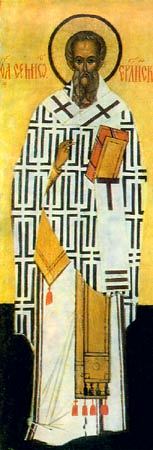
The 9th of Teveth is the yahrzeit for the martyrdom of Saint Rabbi Simeon Colpas, the Compiling Editor of the NT and founder of the Bei Abedan Yeshiva for Messianic Noahides retrieved from among the Notzrim.
Simeon Colpas was originally highly esteemed by Herod Agrippa II and Gamaliel II's Council of Jamnia (80–115) but was martyred at a ripe old age in the early 2nd century after Herod Agrippa II had died and been succeeded by Tiberius Claudius Atticus Herodes (a member of the extended Herodian family erroneously identified as Herod Agrippa II's son).
Saint Rabbi Simeon Colpas was martyred during a time of persecution under the emperor Trajan (Ecclesiastical History 3:32). One intent of this persecution, which began with an order by Domitian, was to eliminate all Jews of the Davidic line, which would have included the Netzarim and "Desposyni" among the Jewish kindred of Jesus Christ following the suggestion of the proconsul Tiberius Claudius Atticus Herodes in the vicinity of Jerusalem. Simon Clopas was martyred because he disobeyed the order of Herodes not to go to Ai (Jericho) to find a diplomatic solution in dealing with the Notzrim there. Simeon Colpas had gone in secret but was betrayed by two couriers of Herodes who accompanied him and was cast down from the Mount of Olives on the way to Ai. His body was taken to Herodes who was delighted by the murder. Herodes did not allow the body of Rabbi Saint Simeon Colpas to be removed from the palace until Herodes himself died. The Sanhedrin established the date of Simeon's martyrdom on the 9th of Teveth as a fast day.
After the fast of the 9th we have the fast of the 10th in remembrance of the conquest of Jerusalem. Reminding us more about the darkness associated with Tekufat Teveth.
This is followed by 8 days of fasting established by Adam to counter the the debauched ways of the Gentiles during Saturnalia as we approach the Tekufat Tevet.
The last fast day of the fasting season is Tekufat Tevet itself which follows the 8 day Fast of Adam.
It is interesting to note that Noahide Judaism's Fasts of Teveth are paraleled by Christianity's almost forgotten Nativity Fast of Advent. Fazlur Rahman Sheikh's work in the Chronology of Prophetic Events by Fazlur Sheik even shows that Islam's Ramadan was originally at the same time of the year. Hence Asara b'Tevet followed by Eid Kalenda is even related to the last 10 days of Ramadan followed by Eid ulFitr.
The fasting season to oppose Saturnalia is followed by the Kalenda celebration which, according to Judaism at least, is mainly about the arrival of the Good News brought by the lengthening of Days to Adam and by Messianic Noahide Judaism as collated by Rabbi St Simeon Clopas for the Notzrim.
TEKUFAT-TEVETH
The last day of the fast is Tekufat Tevet, identified by the last of three longest nights and darkest days during the winter solstice. Tekufat Tevet is the time of the Apostate Notzrim of Northern Israel (such as Benstada) who have secretly done things against the L-rd.
 |
| Ben Stada Judaism's Krampus |
It is at this time of the year that the spirit of Saturnalia seeks to trick humans into sexual immortality as it did a stepbrother of Jesus called Joses Pandora better known as Yosl Pondrik among Jews. This spirit is therefore also named after Yosl who in Judaic tradition raped a disciple of Jesus called Magdalena who named her illegitimate offspring Jesus after her teacher causing all manner of misunderstandings for many centuries. Hence seasonal ghost stories (Christmas Carol, Gremlins, Krampus) are appropriate for the days of tekufat teveth while romantic activity among believers also ceases at this time to deprive Yosl Pondrik of hosts through whom he can sire his children. Hence the Yiddish term Beyz Gebore Nacht (no impregnation night).
 |
| Yosl Pondrik's Offspring |
TIME TO TRIUMPH
Talenight ends at midnight with the completion of the story of how Simon Clopas brought the New Testament to the original Notzrim. And thus the horned Spirit of Saturnalia is subdued. At the completion of this telling a candle is lit and a Pasuk of Torah is read before going to bed. All is now right with the world, all is calm, all is bright.
Hence, when the frosty wind howls down the chimney and drives tiny deerhorn-like snowflakes across the rooftops in the North Terranean Hemisphere, the telling of Xmas comes again to put a leash on Crampus and his cronies proclaiming the rejuvinated novelty of a Messianic future as the old year passes away. The transition is an Alpha and Omega as it personified the death and rebirth of mankind in the end and the beginning of years.
Christ's Engeel (the Christingle symbolised by the Christcandle and originally identified as Mikölas rather than Nikolas with whom he came to be identified) brought on the clouds to the Notzrim by the white horse Rabbi Saint Simon Clopas revealing and Establishing the Rule of God's Inconquerable Logos in the Human Heart to liberate us from the freezing deadly power of darkness and bringing joy to all the oppressed. Saint Clopas and the Notzrim became Santa and his reindeer.
 |
| Messianic Noahide Judaism carrying the Christ Angel |
The Old Year personified as the Ancient of days hands over authority to the New Year which the Fraticelli depicted as the Child Messiah but in the middle ages was represented as Boy Bishops and by the Christ kind (Mary) delivering the word, among German protestants. Good Old Xmas also became known as Old Father Xmas from 1658 earning it Epithets like Grandfather Frost and Kal Gaxan. The personifications are well known.
When it is time for Noahides to swap HaAdam's Nittel fast for Adam's Kalenda celebration, the faithful remnant of Pharisees still describe the influence of Tekufat Tevet through the life of the Talui and recount how this influence was broken by the disciples of Jesus because Xmas is the effort of the disciples of Jesus and without the effort of his disciples there is no Xmas.
Rashi in Avoda Zara 10a (often censored but preserved in Dikdukei Sofrim Avoda Zara p. 12 footnote 9) said: “The Gemara states that all the writings and dialect of the Noahides is not from them. This means as follows: All of their sectarian books, we're written by John, Paul and Peter who were Jews. They purposely affected their culture in order to bring the Notzri faith out of Judaism. They themselves were not sectarians but did so for the benefit of the Jewish people, as written in the Teliya Baraita".
Xmas Eve, on the 7th day of Kalenda...
As already mentioned, since 1582, the darkest night Vigil ends at 00:00:00am on the 25th of December and the hiatus on studying Torah ends at midnight with the beginning of the 8 day Kaleyd (Yiddish for the Talmudic Kalenda i.e. Xmas) celebration established by Adam Kadmon to celebrate the lengthening of days now called Nittel Katan. The protective covers are removed and a Mitzva is observed to begin each new season like Kalenda with a fresh supply of sweet water, as brought down by the 10th century Hai Gaon.
But it is either Xmas Eve the 7th day of Kalenda or the day after the 8th which is the correct day for Jews to give non-Jewish friends presents to separate ourselves from any Gentile activities around the New Year season.
This Halakhah about when to give presents during Kaleyd was recorded by Israel Isserlein (1390-1460) in Austria mentioned in the Terumat HaDeshen [Siman 195. :
שו"ת תרומות הדשן (סי' קצה')
Responsa of the Terumat haDeshen 195
שאלה:
בכמה עיירות נוהגים היהודים לשלוח דורונות לכומרים ולשלטונים ביום שמיני לניתל כשמתחדשין להם השנה, יש חשש זהירות בדבר או לאו
?
Question:
In many cities it is the custom for Jews to send gifts to priests and nobles on Day Eight of Nitel when a year is renewed for them. Should we be concerned about the danger of this or not
?
תשובה:
יראה דיש ליזהר בזה שלא ישלחו ממש באותו יום אלא יום קודם או אחריו
...
Answer:
It appears that we should be careful not to send it on the same day {Eid Kalenda} but rather on a day before {Nitlkatan} or after {Nitlgadol}
...
Main sources for this article are Rabbi Yeshayahu Hollander, Rabbi Dov Meir Stein, Rabbi Yoel Schwartz, Rabbi Steinsaltz, "Christmas Around the World" and the author's family.